
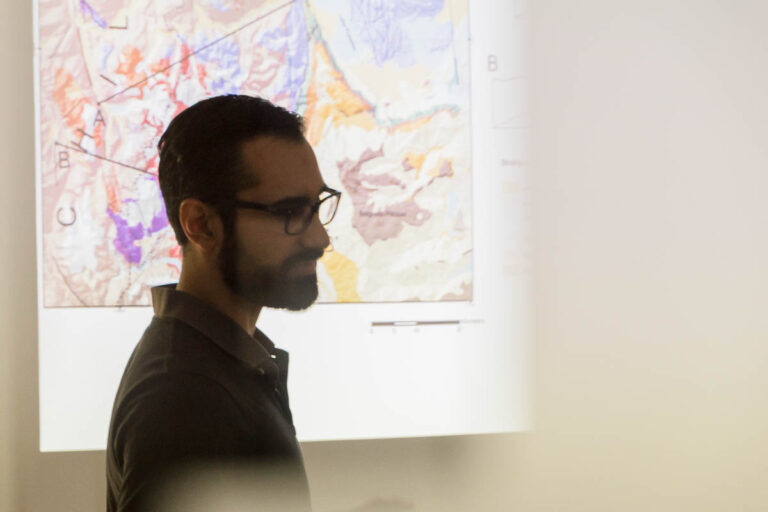
On Friday, January 19, Gonzalo Ronda, who holds a Bachelor of Science in Geology, gave a seminar at La.Te. Andes on “Thermochronological Analysis in the Southern Patagonian Andes, Santa Cruz Province,” based on his doctoral project and the objectives to be achieved through the application of AFT results.
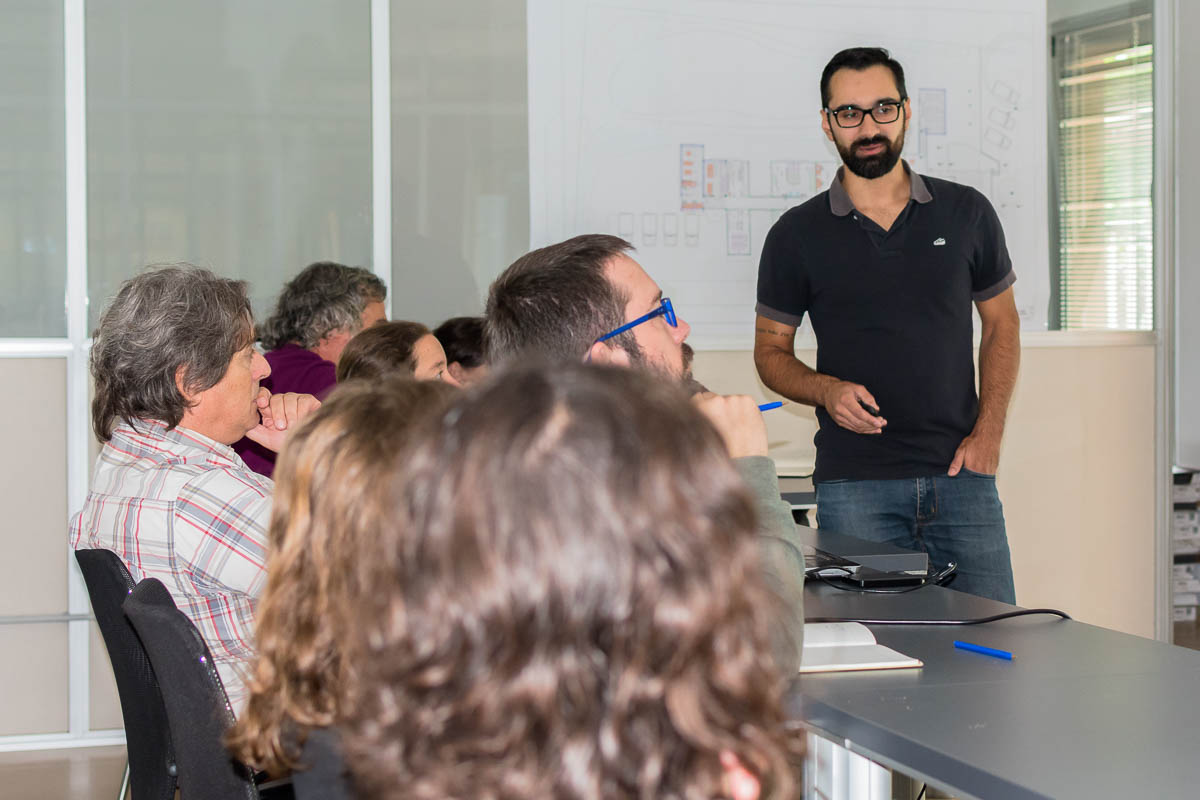
Gonzalo is a CONICET fellow at the University of Buenos Aires (UBA) and is currently completing an internship focused on the study and measurement of trace elements in apatite at the La.Te. Andes headquarters through January 26.
Mr. Ronda’s internship is part of La.Te. Andes’ internal activities plan, which focuses on human resources development and collaboration on applied research projects in various basins across our country. Previously, he completed an internship at the Fission Tracer Laboratory with Dr. Isabelle Coutand of the Department of Earth Sciences at Dalhousie University in Halifax (Nova Scotia, Canada).
Mr. Ronda’s doctoral research focuses on the “Characterization of the exhumation and Neogene deformation of the Andean sector located between Lakes Belgrano and Buenos Aires, Southern Patagonian Andes, Santa Cruz Province” and is supervised by Dr. Matías Ghiglione (IDEAN-CONICET) and Dr. Isabelle Coutand.
In the southern Patagonian Andes of Santa Cruz, a complex geodynamic scenario involving oceanic ridge subduction, orogenic uplift, the development of asthenospheric windows, and glaciations has unfolded over the past 40 million years. This project aims to determine the contribution of the various components to the uplift of the region and its exhumation, using structural geology and thermochronology as essential tools.
During the first week of his internship at the La. Te. Andes Research Center, Gonzalo receives an introduction to the procedures and equipment available in the laboratory, the specific operation of the Autoscan and the measurement software, concluding with the measurement and calculation of the Z-value (personal control). He will subsequently perform measurements on his samples and calculate the central age.