
We apply the Fission Track Analysis technique in apatites and zircons (AFTA / ZFTA) to obtain datings. The results derived from this technique allows the reduction of oil and gas exploratory risk, specifying:
In addition, the interpretative analysis of these results helps to understand the evolutionary history of mountain ranges and exhumation / burial cycles, among other geological processes.
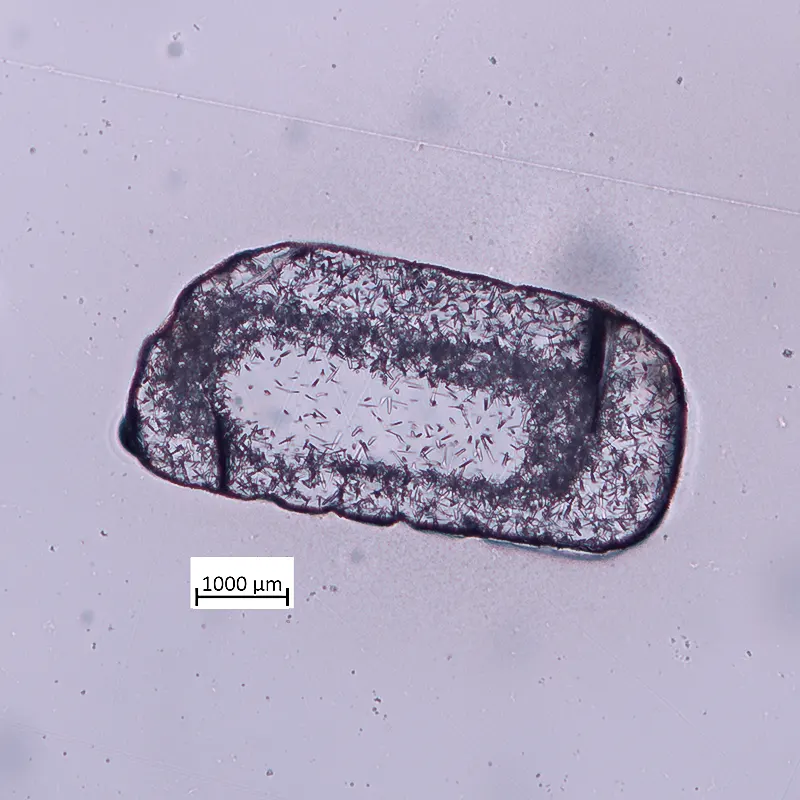
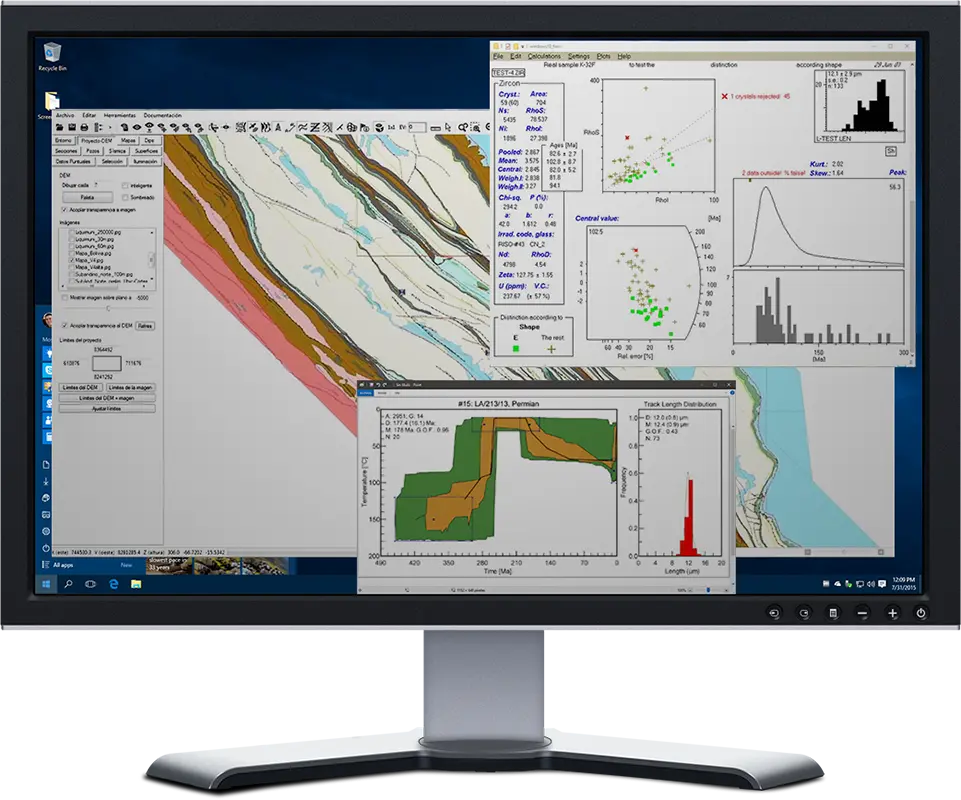
At most analytical centers that offer commercial services, the final product consists of numerical data on the age and thermal evolution of the samples (numerical modeling).
At LA.TE. ANDES, we go a step further and develop a comprehensive interpretive analysis of the results, grounded in geological knowledge and an assessment of the factors involved in quantifying the region’s resource potential.
The key element that enables this qualitative difference is our close collaboration and interaction with Geomap S.A., both during the sample collection phase and throughout the analytical and interpretive phases. Their experience and in-depth knowledge of the Northern Sub-Andean System of Argentina and Bolivia, gained through more than 25 years of activity, are thus incorporated into our final product.
Sampling
The samples are linked to their respective formation as well as to the field data.
Storage in the
repository
The sample is received with its data, and a lab code is generated.
Milling
Coarse milling, fine milling, and sieving.
Concentration of
heavy metals
Using a Frantz magnetic separator, dense liquids, or picking.
Preparation
of the tablet
Beaker phase and polishing phase.
Neutron
irradiation (EDM)
The sample is irradiated in the RA3 nuclear reactor at Ezeiza.
Etching
The sample is treated with acids to visualize the fission tracks.
Raman
Spectrometry
To perform a compositional analysis of the elements Cl and F in apatite samples.
Analysis of
fission tracks
Counting of natural traces. Counting of induced traces.
LA-ICP-MS
Uranium measurement by laser ablation.
Modeling
Determination of the samples thermal history and the temperature-time trajectories for the various geological events in the area.
Report
Submission of the data and its interpretation.
With our capabilities and the application of this work methodology, we are able to offer the following products and services, among others:
Through physical methods of crushing and grinding of the rock sample, followed by screening and the use of Franz magnetic separators, as well as heavy liquids, to achieve the desired result.
For various microscopic studies, including the petrography of opaque minerals, fluid inclusions, and fission tracks in apatites and zircons.
Fission track dating of zircons and apatites using the Trakkey software.
Using apatites or zircons, once a minimum measurement was obtained from 100 crystals and the lengths of the confined traces were measured.
In minerals such as apatite and zircon and/or synthetic materials, glass, etc.
The data are modeled using the HeFty and Pecube software, which provide information on temperature-time path, as well as temperature ranges, burial and exhumation ages, or tectonic events. The result is an interpretation and a final report.
Using the Petromod software (Petrotrack module), the degree of maturation that the organic matter has reached is determined, which indicates the range within the generation window in which a formation is located.
Using Raman spectrometry.
Determined using Raman spectometry.