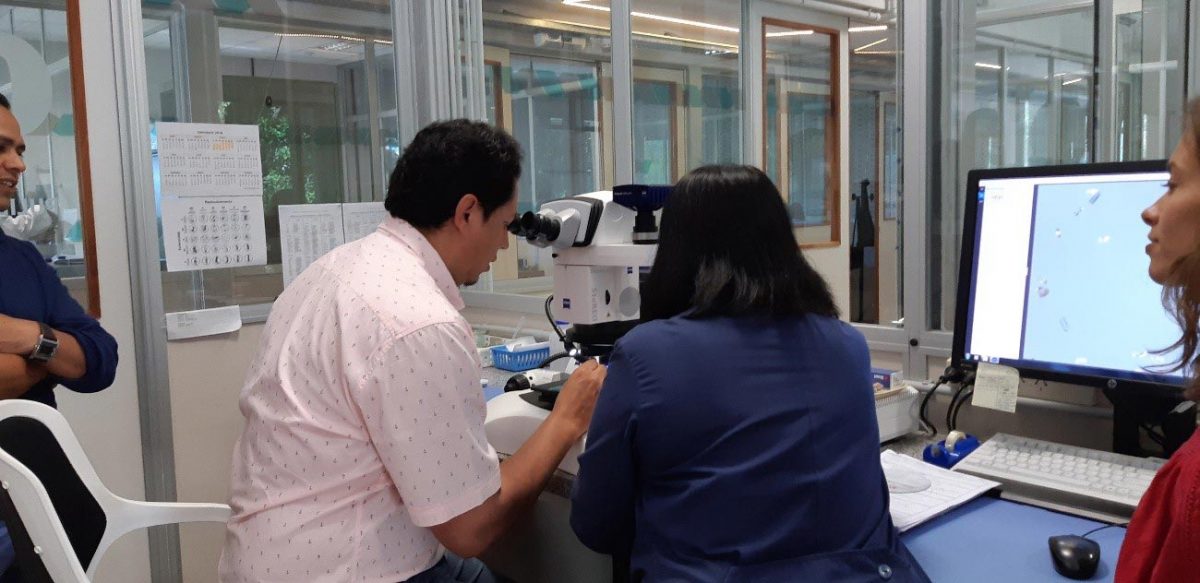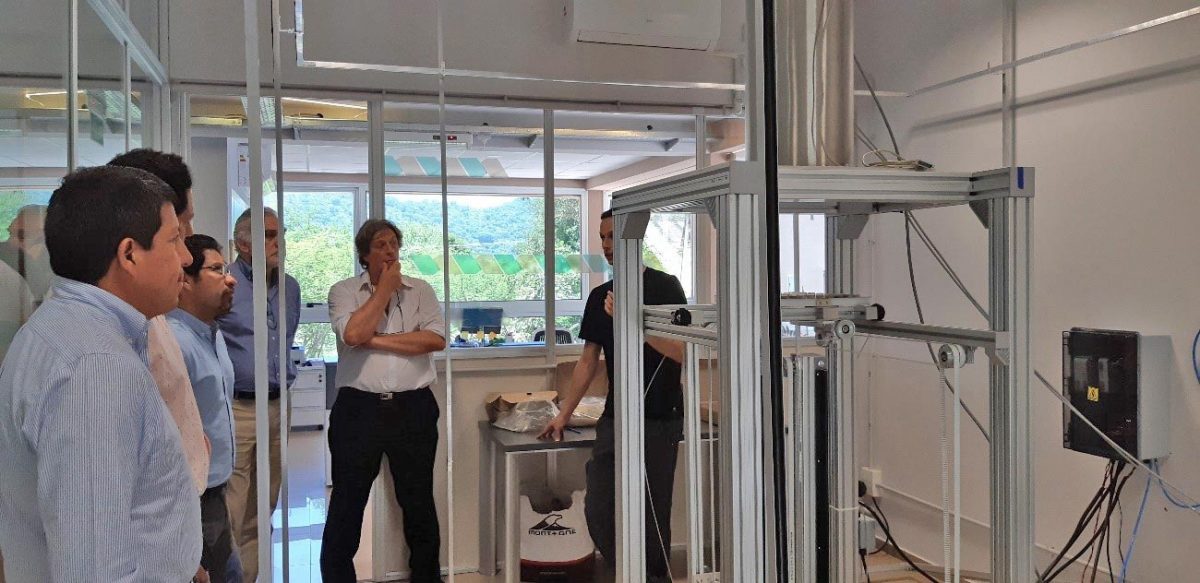
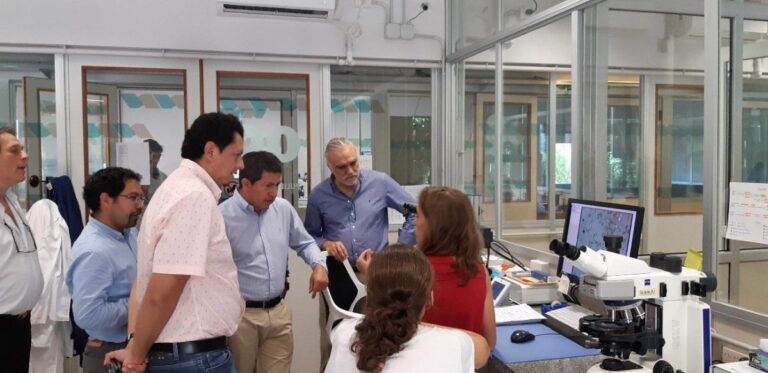
Bolivia’s Minister of Hydrocarbons, the President of YPFB, and the Deputy Minister of Hydrocarbon Exploration and Production from the Ministry of Energy visited the joint venture LA. TE. ANDES S.A.—formed by the Salta-based company GEOMAP and CONICET—earlier this year.
LA.TE ANDES S.A. developed the method for geochronological and thermochronological dating, which is essential for determining the age of rocks and the geological processes involved in the petroleum system.
The method allows for a significant reduction in exploration risks and ensures the accuracy of time data in the conversion of hydrocarbon resources into reserves.
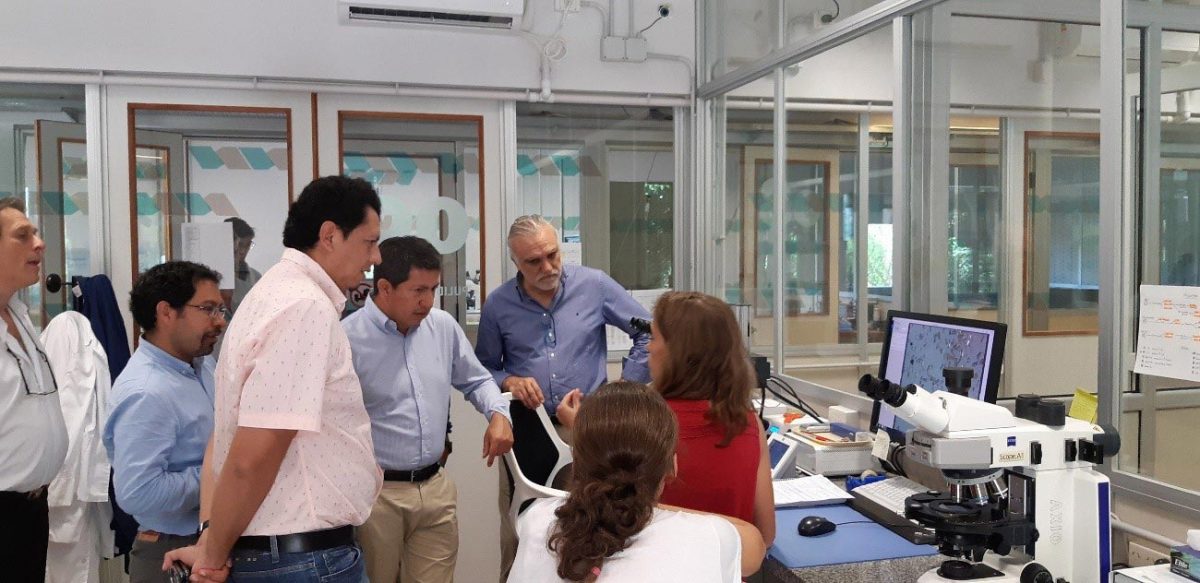
To learn more about this development, between January 8 and 9, LA.TE. ANDES S.A. was visited by the Minister of Hydrocarbons of the Plurinational State of Bolivia, Engineer Luis Alberto Sánchez Fernández, the Vice Minister of Hydrocarbon Exploration and Production, Engineer Carlos Alberto Torrico Borja, and the Executive President of Yacimientos Petrolíferos Fiscales Bolivianos, Engineer Oscar Javier Barriga Arteaga.
The delegation from the Ministry of Hydrocarbons and YPFB learned about the development of the Cri.Ar. Cryogenic Magnetometer, which was awarded by the Argentine Physics Association in 2018 as a tool for determining the rates of geological processes in the petroleum system. They also learned about the methodology for dating using apatites and zircons through various methods, utilizing equipment that is unique in Argentina and South America.
They specifically explored the possibilities for transferring science and technology to Bolivia and YPFB through LA.TE ANDES S.A., which brings together two groups dedicated to generating knowledge in geosciences: GEOMAP and CONICET.
Bolivia and Energy Resources
The highest levels of executive management within the Bolivian government identified that the foundation for development—moving from resources to reserves while minimizing risk—lies in knowledge and the best possible technology to achieve success in reserve conversion.
The Plurinational State of Bolivia is one of the hubs for conventional energy resources in the region, as demonstrated by gas exports to Argentina and Brazil, along with the development of gas industrialization through a modern urea plant.
As a non-renewable resource, Bolivian society is making a great effort to extend hydrocarbon reserves.
For the past 11 years, significant exploration investments have been made to assess the actual strategic hydrocarbon potential within Bolivia.
As a result of the investments made in Bolivia, not only were the known reserves of 10.7 TCF defined, but also a large volume of “resources” in different areas of Bolivian territory across various geological environments (the Sub-Andean Highlands and the Chaco) within different potential petroleum systems.
With great determination, Bolivia invested in the deepest known onshore hydrocarbon exploration well, at a depth of over 7,800 meters. This project, currently awaiting its gas production results, broke exploration paradigms of the petroleum system, raising enormous expectations regarding resources for the discovery of new hydrocarbon reserves.
Once again, it has been demonstrated in South American hydrocarbon basins that established paradigms were incorrect due to a lack of understanding of the relationship between the formation time of oil/gas and the generation of the trap; likewise, the temporal relationship of the formation of the various structures in the folded and faulted belts.
For this reason, the highest levels of executive management within the Bolivian government have identified that the foundation for moving from resources to reserves while minimizing risk lies in knowledge and the best possible technology to achieve success in reserve addition.
From this perspective, GEOMAP and CONICET welcome the Bolivian authorities’ interest in the available technological developments for rock dating and look forward with particular anticipation to the conclusion of specific agreements.